Blog
PCNC Welcomes Port of San Francisco’s Director Elaine Forbes – Sept 20, 2018

Topics that that Elaine Forbes discussed:
- Sea Wall
- Update on Cruise Ship & Auto Business
- Ferry Terminal
SF Port Director promotes $425 Million Seawall to Combat Higher Sea Level
PCNC Welcomes Congressman John Garamendi – Sep. 17, 2018

At the Luncheon Congressman Garamendi discussed:
- Maritime Items before Congress
- H.R. 5893, the Energizing American Shipbuilding Act
- H.R. 6206, the U.S. Coast Guard Blue Technology Center of Expertise Act
- 2018 Champion of Maritime Award from the American Maritime Partnership
Rep Garamendi warns U.S. is vulnerable to Russian polar dominance of sea lanes
U.S. Congressman John Garamendi Receives ‘Champion of Maritime’ Award
PCNC Welcomes Oakland Mayor Libby Schaaf – April 12, 2018

Mayor Schaaf spoke about Oakland’s economic development issues relating to:
- Port of Oakland
- Transportation access to the Port
- Economic development on the waterfront
- Sustainability issues
A Message From U.S. Coast Guard To Towing Vessel Partners
Towing Vessel Industry Partners:
Please note and save the date for the following Subchapter M implementation industry outreach and education meetings:
Seattle, WA – 12 September 2017 @ 1000 – Federal Center South
Portland, OR – 14 September 2017 @ 1000 – Marine Safety Unit Portland
Alameda, CA – 19 September 2017 @ 1000 – Coast Guard Island
Long Beach, CA – 21 September 2017 @ 1000 – Sector LA/LB
Building and maintaining a positive working relationship with our industry partners is a continued priority as we begin to sunset the Towing Vessel Bridging Program and transition to the Inspection of Towing vessels. The meetings we have planned are a continuation of efforts to communicate the policy, tools, and resources available to help you succeed in the transition to inspection.
While we intend for these meetings to be informative in nature, we hope to promote an open forum environment to hear and address questions and concerns you may have with regard to Sub M implementation and compliance. Coast Guard representation from PACAREA, regional Districts, local field units, and the Towing Vessel National Center of Expertise will be in attendance to emphasize our commitment to regional and national implementation consistency.
Tentative agenda items:
1. Subchapter M Policy and Guidance
2. Implementation tools and resources
3. COI Process and local expectations
4. Questions and concerns
If you have specific issues you would like to see addressed during the public meetings please contact your local Sector or District towing vessel representative.
A more formal invitation and detailed agenda will be communicated at a future date. Thank you for your continual efforts to operate safely.
USCG
PCNC Welcomes Captain Anthony Ceraolo USCG on June 6,2017
Captain Ceraolo discussed:
The State of Northern California Ports
JOC’s Bill Mongeluzzo Tuesday April 4th
The Journal of Commerce’s Bill Mongelluzzo addressed PCNC on Tuesday, April 4th and discussed :
*The new ocean carrier re-organizations and what they mean to U.S. Pacific Coast ports.
*The loss of U.S. Pacific Coast port business.
*No major changes to Port of Oakland business.
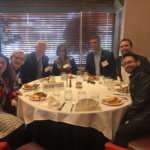
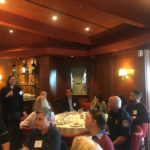
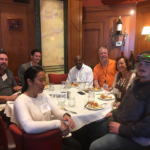
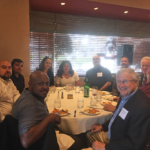
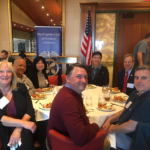
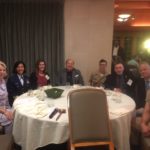
Please see April 4th luncheon photos below and Bill’s power point presentation.
2017 – An Eventful Year by Bill Mongelluzzo
PCNC Welcomes Welcomes PMSA’s John McLaurin: California Ports Outlook 2017
The Propeller Club of Northern Califortnia gathered on February 7, 2017 at Scott’s Grill to listen to John LcLaurin’s Outlook for 2017.
PCNC November 17, 2016: Red & White/Sandia Fuel Cell Ferry Project
By Joseph William Pratt, Sandia National Labs
The fuel cell ferry project (SF-BREEZE) examined the technical, regulatory, and economic feasibility of a zero-emission, high-speed passenger ferry powered solely by hydrogen fuel cells and its associated hydrogen fueling infrastructure within the context of the San Francisco Bay. In conjunction with a naval architect, a realistic, feasible vessel design meeting all performance specifications was produced. Collaboration with and evaluation by both the US Coast Guard and the American Bureau of Shipping did not reveal any insurmountable regulatory obstacles to deployment. The supply of liquid hydrogen to the vessel was examined and viable sites were found at the Port of San Francisco and the Port of Redwood City. Industrial gas companies were consulted and provided technically viable fueling facility designs. The current design of the zero emission ferry has a cost premium compared to a conventional diesel ferry. Cost reduction strategies specific to the vessel and leverage of those expected in the fuel cell electric vehicle market may result in future cost parity.
For more information: http://maritime.sandia.gov